
中文翻譯:
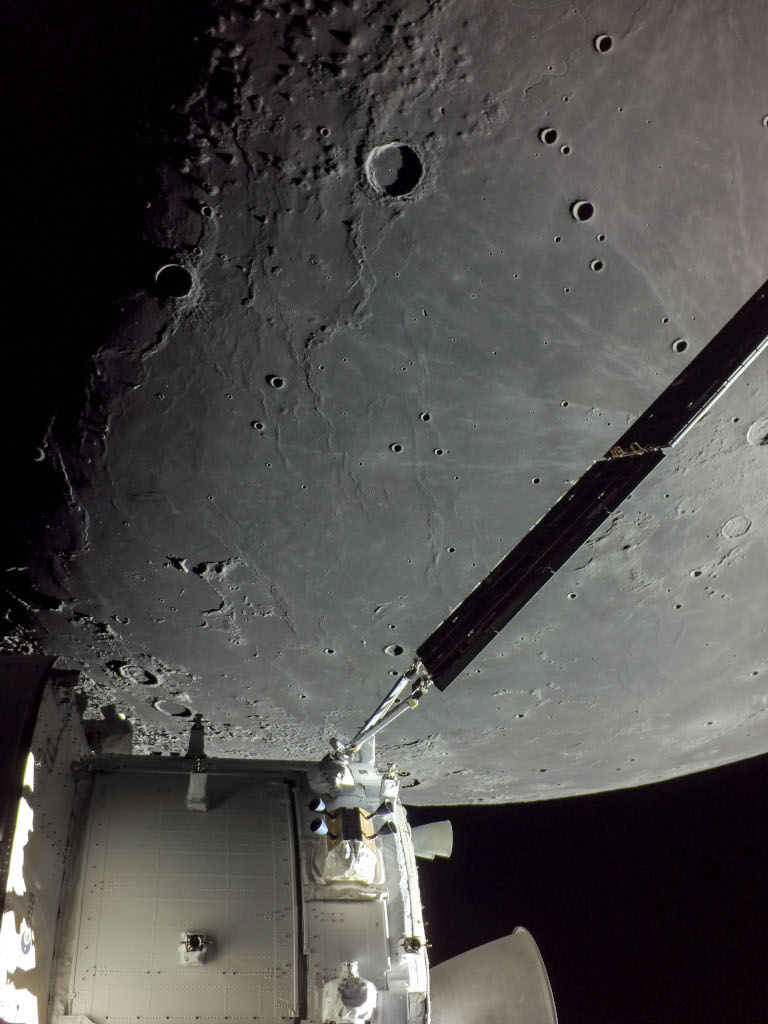
在2022年12月5日,一架無人駕駛的Orion太空船上的攝影機捕捉到了這幅畫面,當時Orion正接近月球的返航電力滑行。Orion的一個大型太陽能電池板的背後,是位於Oceanus Procellarum(暴風之海)西邊的黑色平滑地形。Oceanus Procellarum是月球上最大的一片熔岩淹沒的平原。月球的 terminator(晝夜分界線)正好位於畫面的左側。位於畫面正上方的是直徑41公里的Marius隕石坑,Kepler隕石坑則在畫面的右邊,從太陽能電池板的邊緣探出。Kepler的耀眼光線延伸到北方和西方,觸及到黑暗的Marius隕石坑。到了2022年12月11日,Orion太空船已經安全返回到它的家──地球,歷史性的Artemis 1任務以Orion在太平洋的成功著陸結束了。現在,我們可以期待流星雨的到來!
原文:
On December 5, 2022, a camera on board the uncrewed Orion spacecraft captured this view as Orion approached its return powered flyby of the Moon. Beyond one of Orion’s extended solar arrays lies dark, smooth, terrain along the western edge of the Oceanus Procellarum. Prominent on the lunar nearside Oceanus Procellarum, the Ocean of Storms, is the largest of the Moon’s lava-flooded maria. The lunar terminator, the shadow line between lunar night and day, runs along the left of this frame. The 41 kilometer diameter crater Marius is top center, with ray crater Kepler peeking in at the edge, just right of the solar array wing. Kepler’s bright rays extend to the north and west, reaching the dark-floored Marius. By December 11, 2022 the Orion spacecraft had returned to its home world. The historic Artemis 1 mission ended with Orion’s successful splashdown in planet Earth’s water-flooded Pacific Ocean. Watch: The Geminid Meteor Shower
來源:NASA每日圖片

