
Copyright:José Rodrigues
中文翻譯:
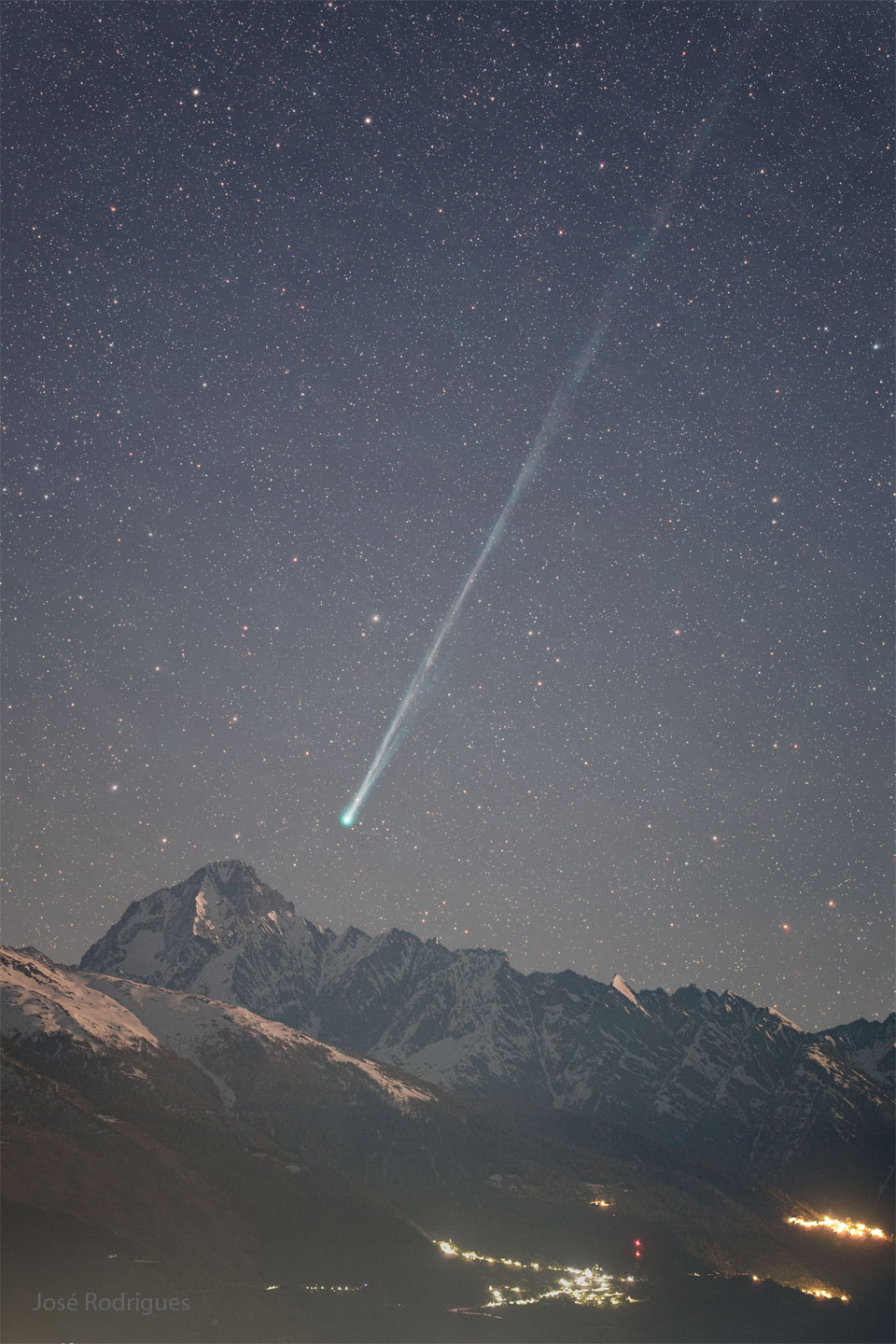
在太空中,有一顆叫做C/2025 R3的彗星正在變得越來越亮,這顆彗星的名字是R3(PanSTARRS)。自從去年發現以來,它已經慢慢變亮並且生成了一條長長的離子尾巴。這個月它會展現出最美麗的天空表演,因為它將在4月19日最接近太陽,然後在4月25日最接近地球。這張特別的照片是兩天前在瑞士的西昂拍的,上面可以看到R3的尾巴延展超過10度。R3會在4月中旬的黎明前可見。雖然預測彗星的未來亮度很難,但R3已經變得相當亮,可能在下週就能被肉眼看見。至於R3的未來,還是未知的,因為像本月早些時候的A1(MAPS),它也有可能在接近太陽時解體,或者它可能活得久一些,離開太陽系。
原文:
Comet R3 is brightening rapidly — will it survive? C/2025 R3 (PanSTARRS) has been slowly brightening and extending an ion tail since its discovery last year. This shedding mountain of dirty ice puts on its best sky show this month, though, because it passes its closest to both the Sun (April 19) and the Earth (April 25). The featured image, showing R3 already sporting a tail extending over 10 degrees, was taken two nights ago from Sion, Switzerland with the big mountain Bietschhorn on the left. Comet R3 will be visible during mid-April before sunrise. Although the future brightness of any comet is hard to predict, the brightness of R3 makes it already a good camera comet and it may become visible to the unaided eye in the next week. Comet R3’s physical future is also unknown because, like Comet A1 (MAPS) earlier this month, it may disintegrate when it passes its closest to the Sun. Or it may live to leave the Solar System. Growing Gallery: Comet R3 in 2026
來源:NASA每日圖片

