
中文翻譯:
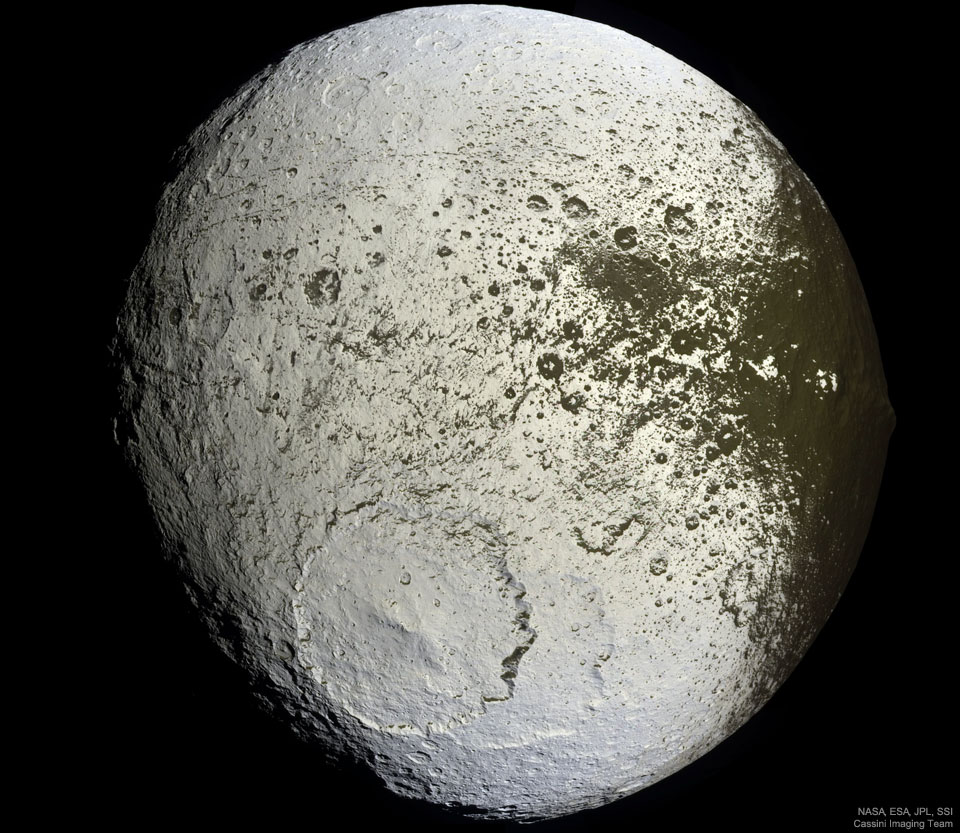
在遙遠的太空中,土星的衛星依亞比斯(Iapetus)是一個非常特別的月球!它有些地方像煤一樣黑,而有些地方則白得像雪一樣。2007年,美國太空總署(NASA)推出了一個叫卡西尼(Cassini)的太空探測器,前往探究這個奇怪的月球。在距離依亞比斯約75,000公里的地方,卡西尼拍下了這張照片,展現它的黑暗面。我們可以看到一個大大的撞擊 crater(隕石坑),大小大約有500公里,而且這個隕石坑的上面還有一個更古老的隕石坑!在依亞比斯的東邊部分,越來越多的黑色物質覆蓋了這裡,把隕石坑和高山都變得暗淡。科學家猜測,這些黑色物質可能是從其他衛星那裡來的,像是在陽光下融化的骯髒冰塊留下的土壤,這些骯髒的土壤就像是站在太陽底下的塗鴉,慢慢被風吹過而變成黑色的!
原文:
What has happened to Saturn’s moon Iapetus? Vast sections of this strange world are dark as coal, while others are as bright as snow. To help better understand this unusually tinted moon, in 2007 NASA directed the robotic Cassini spacecraft then orbiting Saturn to swoop within 2,000 kilometers. Pictured here, from about 75,000 kilometers out, is the hemisphere of Iapetus that is always trailing. A large impact crater seen in the south spans 500 kilometers and appears superposed on an older crater of similar size. The dark material is seen increasingly coating the easternmost part of Iapetus, darkening craters and highlands alike. A leading hypothesis is that the dark material is mostly a form of carbon-rich soil leftover from when relatively warm but dirty ice sublimates. An initial coating of this dark material may have been effectively painted on by the accretion of meteor-liberated debris from other moons. Jigsaw Moon: Astronomy Puzzle of the Day
來源:NASA每日圖片


